II. The Valley
The Whangaehu Valley & Its People
Mangamāhū, “gentle stream”, a name carried in the creek that curls through these hills long before the hotel was ever built.
Long before European settlement, the Mangamāhū Valley formed part of an important Māori landscape within the rohe of Ngā Wairiki / Ngāti Apa, with enduring connections to neighbouring Whanganui iwi. The valley’s name, Mangamāhū, meaning roughly “gentle stream”, reflects the character of the waterway that winds through the hills here, a tributary feeding into the wider Whangaehu River system.
The Whangaehu River and its tributaries were central to life in this rohe. They supported seasonal food gathering, provided routes for travel between coastal and inland settlements, and shaped where and how communities lived across these hills for generations.
Settlement & Farming
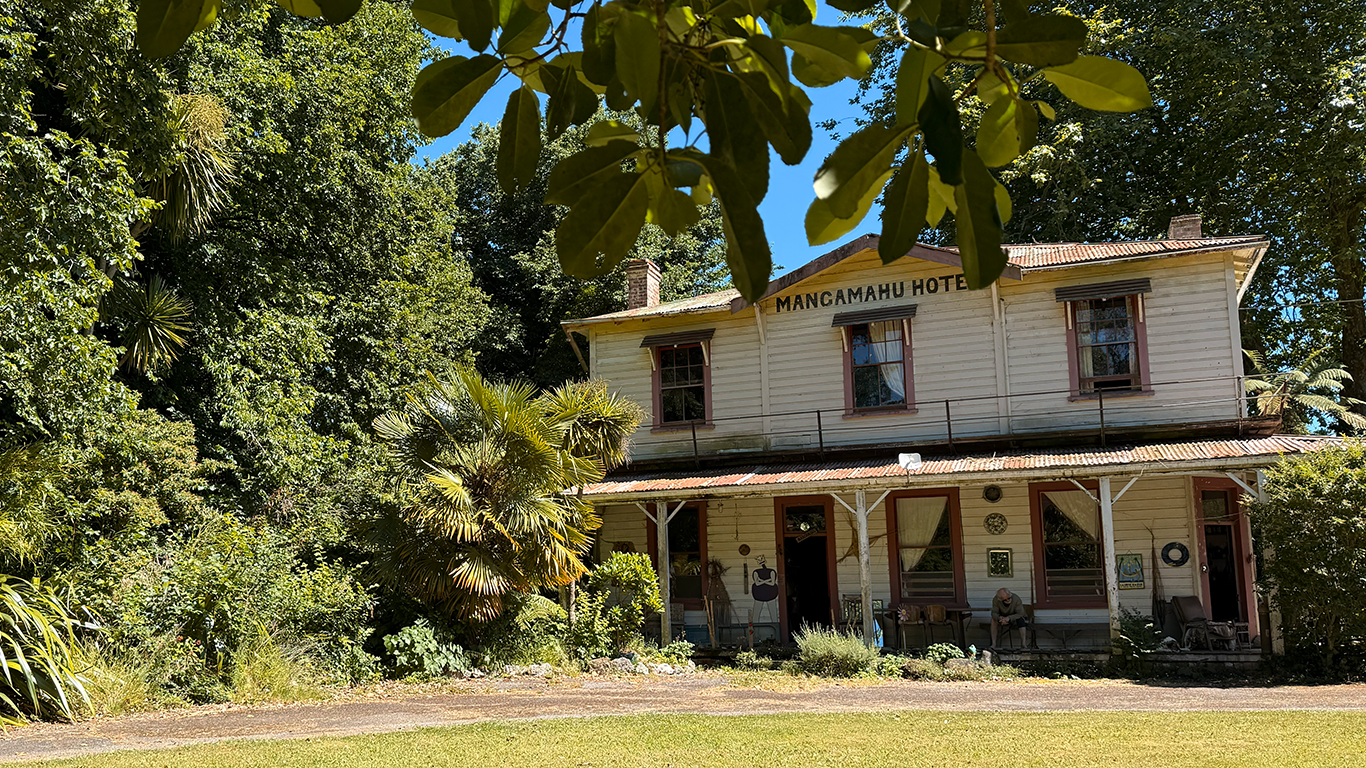
As European settlers arrived in the late nineteenth century, farming took hold across the valley’s steep hill country. The hotel was established in 1894 to serve this growing but isolated community, a place where farming families, drovers, and travellers could meet, trade news, collect mail, and rest.
Today the valley remains sparsely populated and largely agricultural, a quiet corner of the Whanganui hinterland where the pace of change has been slow, and where the hotel still stands as a marker of the valley’s layered history.