Establishment (1890s)
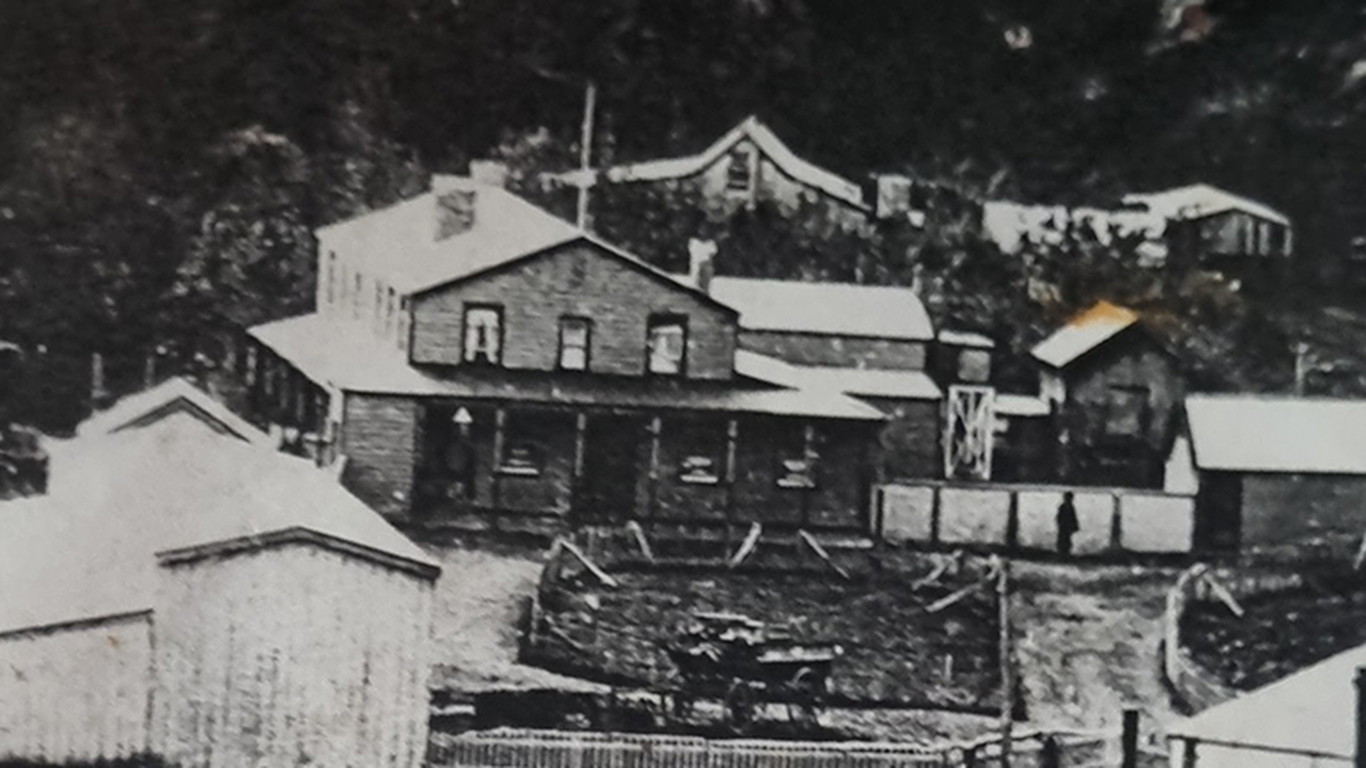
The Mangamāhū Hotel was established in the early 1890s during the period of European settlement in the Whangaehu Valley. In 1879, Arthur Ellis and Allan Robinson purchased land in the area, and by 1889 had established a supply store and post office to service the growing rural population.
In 1891, they constructed an accommodation house to serve settlers, travellers and workers using Hales Track, an important inland route linking Whanganui with the central North Island. By 1894, the building had obtained a publican’s licence and was operating as a 12-bedroom hotel.
From the outset, the hotel functioned as more than a place to stay or drink. It also housed the local post office and acted as a practical hub for a remote and developing district.
Community Role
For much of its operating life, the Mangamāhū Hotel was the centre of social and commercial life in the valley. It provided accommodation for shearers, farm workers, carriers and travellers, and served as a regular meeting place for local residents.
Newspaper records from the early 20th century document the hotel’s involvement in community events, including sporting gatherings and local celebrations. The publican was often a prominent figure in Mangamāhū, supporting social activities and acting as a point of connection in an isolated rural setting.
Fire and Rebuilding (1914–15)
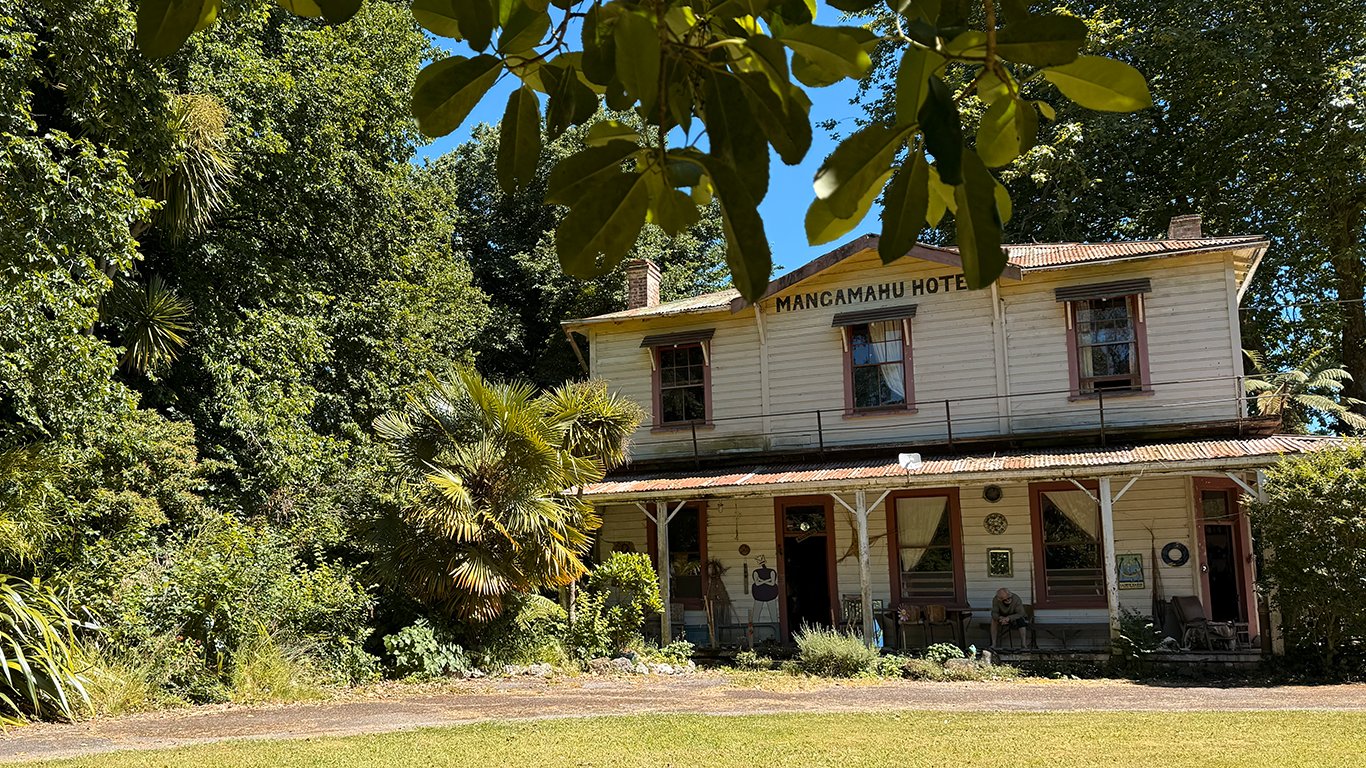
On 10 May 1914, the original Mangamāhū Hotel building was destroyed by fire. Contemporary reports confirm the loss was total.
The hotel was rebuilt shortly afterwards. By around 1915, a new two-storey timber hotel had been completed on the original site. This rebuilt structure forms the basis of the building as it stands today.
The rebuilding marked a significant moment in the hotel’s history, but it did not alter its essential role. The new building continued to serve the Mangamāhū community for many decades.
Mid-20th Century Use
Following the rebuild, the Mangamāhū Hotel remained in continuous operation through the first half of the 20th century. It continued to provide accommodation, hospitality and a social focus for the district.
During this period, Mangamāhū was a functioning rural service centre, supporting surrounding farms and forestry operations. The hotel was one of the few places where people gathered regularly, reinforcing its importance beyond its commercial function.
Discover oral histories
Closure as a Licensed Hotel (1974)
By the mid-20th century, changes in transport, farming practices and population patterns reduced reliance on local services. Increased car ownership made it easier for residents to travel to Whanganui, and the local population gradually declined.
In 1974, the Mangamāhū Hotel closed as a licensed premises. Its closure occurred at the same time as the closure of the Mangamāhū general store, marking the end of the village’s role as a service centre.
Although the hotel no longer operated commercially, the building itself remained, entering a new phase of residential use.
The Hotel as a Community Focal Point
Oral histories consistently describe the Mangamāhū Hotel as a central point of connection in an otherwise isolated rural district.
For much of the late 19th and early 20th centuries, Mangamāhū had few shared public spaces. The hotel was one of the only places where people gathered regularly, whether to meet travellers, collect mail, discuss farming conditions, or mark social occasions.
Residents recall that the arrival of transport, mail, or visitors often drew people to the hotel. News was exchanged, arrangements were made, and community matters were discussed. In this way, the hotel operated not only as a commercial premises but as an informal civic centre.
This role became particularly important during periods of uncertainty or disruption, when information travelled slowly and shared spaces mattered.
Everyday Life and Social Change
Social conventions
Oral histories also capture changing social norms. One widely recalled story concerns Mrs Morris, a Mangamāhū schoolteacher, who was invited into the public bar of the hotel while travelling with male colleagues.
At the time, women were typically served in a separate parlour. Mrs Morris later claimed to be the first woman to drink in the public bar at the Mangamāhū Hotel. The story is remembered locally as an unusual event that reflected shifting attitudes rather than a formal policy change.
Chance Encounters and Lasting Connection
Another remembered account involves a former Mangamāhū resident visiting her daughter in England many years after leaving New Zealand. While waiting in a barber’s shop outside London, she struck up a conversation with another New Zealander. Both discovered they had been born in Mangamāhū.
The story is remembered as a small but striking example of how connections to the valley persist long after people leave, and how the hotel often served as a shared reference point in those memories.Early Figures
Arthur Ellis
Co-founder of the Mangamāhū settlement and first proprietor of the accommodation house that became the Mangamāhū Hotel. Ellis also served as local postmaster, with the post office operating from the hotel in the 1890s.
Allan Robinson
Early landowner and business partner of Arthur Ellis. Robinson was involved in the establishment of the store, post office and accommodation house that formed the nucleus of early Mangamāhū.
Early 20th Century
James Sarsfield Lacy
Purchased the hotel in 1904 after leasing it. Lacy operated the hotel during a period when Mangamāhū was a thriving rural service centre and was publicly acknowledged for his support of community events.
E. L. J. Archer
Licensee at the time of the 1914 fire and associated with the rebuilding of the hotel in its current form. The Archer family operated the hotel for several decades following the rebuild.
Later Stewardship
Robin White and Mere Keating
Purchased the Mangamāhū Hotel in 1975 and lived there with their daughters Bershka, Danielle and Victoria. During this period, the building transitioned fully into residential use.
Mere Keating and Peter Reynolds
Returned to live in the hotel in 1993. Since that time, the building has continued as a private home and creative working environment.
A NOTE ON SOURCES
The material on this page draws on:
First-hand recollections
Family memory
Local oral tradition
These accounts are included to document lived experience and community memory. They are clearly distinguished from the verified historical record presented elsewhere on this site.