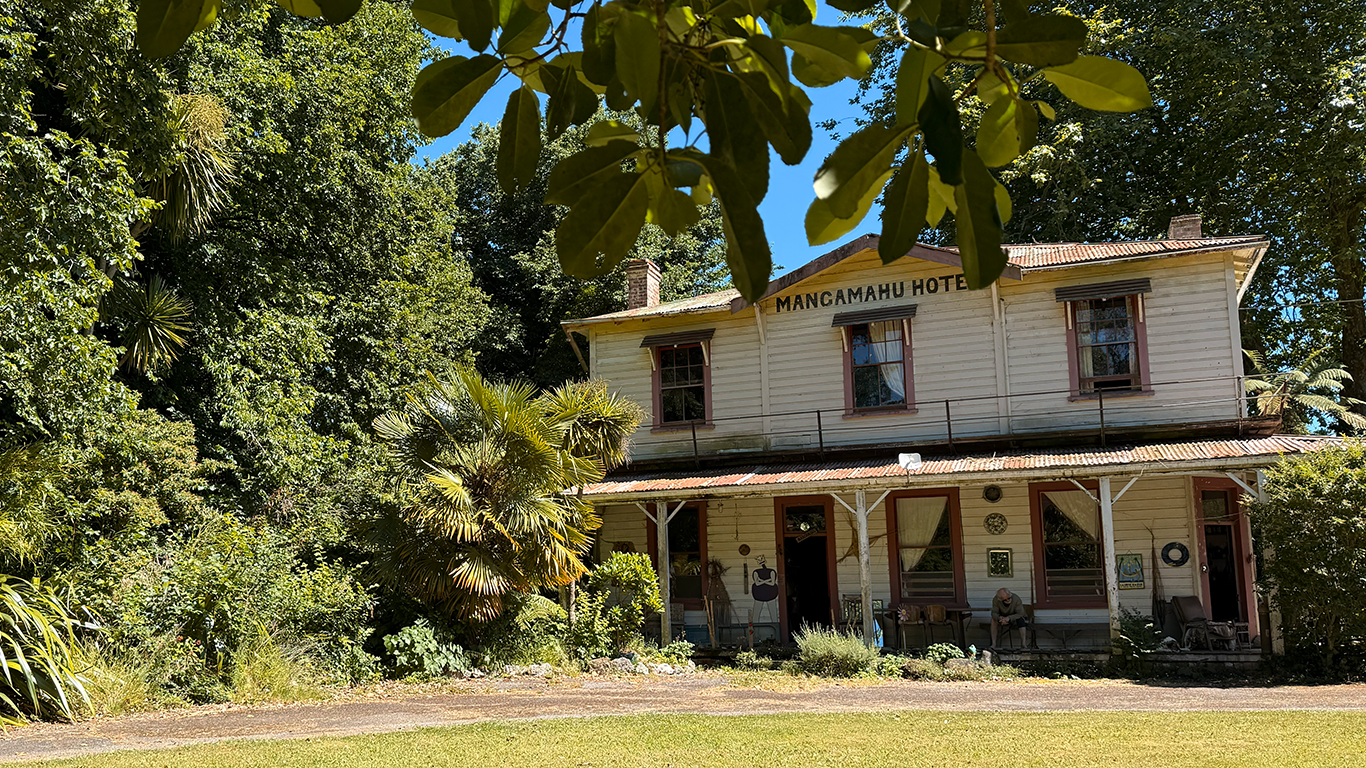
I. The Hotel
The History of the Hotel
A twelve-bedroom bush hotel, built to serve an isolated farming community, and, remarkably for its time, lit by its own hydro-electric power.
The Mangamāhū Hotel was established in 1894 to serve the small, isolated farming settlement growing along the Whangaehu Valley, northeast of Whanganui. In an era before reliable roads, the hotel functioned as far more than a place to drink or sleep. It was the district’s post office, its meeting hall, its supply depot, and its social heart.
Twelve bedrooms accommodated travellers, drovers, and workers passing through the valley. Meals were served to the community, mail was collected and distributed, and news of the wider world arrived here before anywhere else in the district.
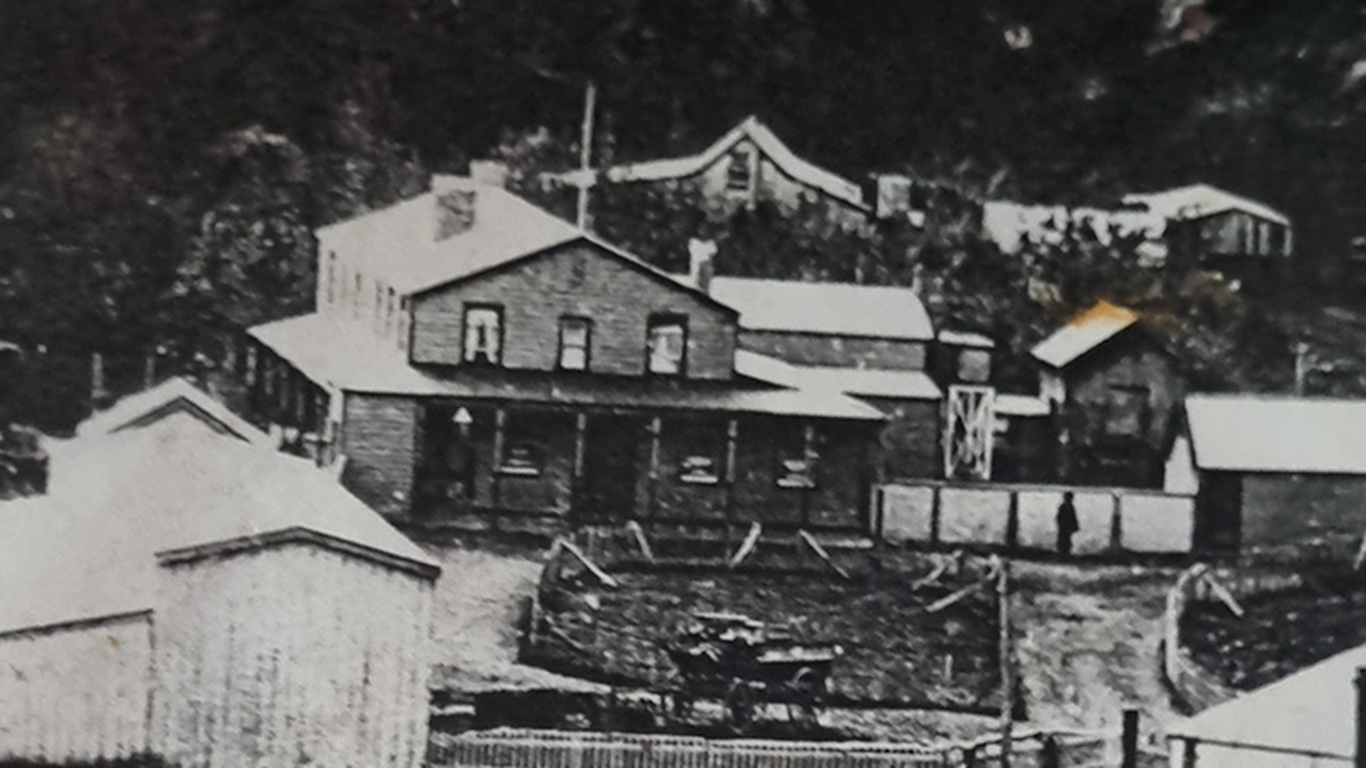
Rebuilding After the Fire
In 1914, fire destroyed the original hotel building. The community rebuilt it on the same site, and the structure that stands today is substantially that 1914 building, making it a rare surviving example of a rural New Zealand country hotel from the period, largely unaltered for more than a century.
Perhaps most remarkable was the hotel’s early embrace of electricity. In the 1890s, a small hydro-electric system was installed to generate power directly from the valley’s waterways, used for lighting the building and even for ironing linens. This was decades before most rural New Zealand communities had access to reliable electric power, and speaks to the ambition and self-sufficiency of those who built and ran the hotel.
A Living Building
As the district’s population declined through the twentieth century and the hotel’s commercial trade wound down, the building’s role shifted. Rather than falling into ruin, it found new life, first as a private home, and later as a gathering place for artists. Today it remains a privately lived-in heritage building, its rooms, verandas, and timber largely as they were when rebuilt in 1914.
The hotel is now in the process of being placed into a family trust, with the intention of restoring and safeguarding it for the long term, beginning with the urgent work of replacing its ageing roof.