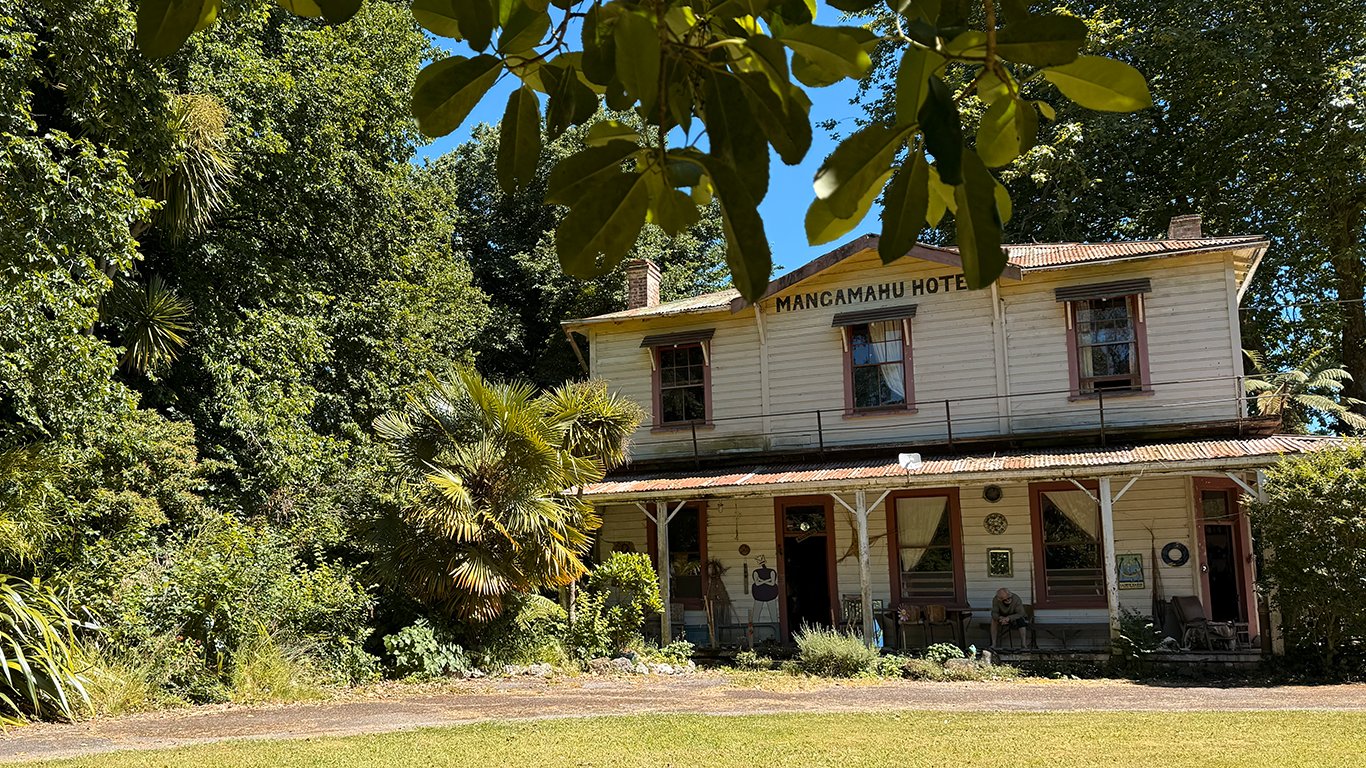
The hotel exterior, Whangaehu Valley, rebuilt following the fire of 1914
The Roof Appeal
The roof has not been fully replaced since the rebuild of 1914. Replacing it is what protects everything underneath it.
A Rare Surviving Rural Hotel,
Largely Unchanged for More Than a Century
Established 1894 · Rebuilt 1914 · Whangaehu Valley, Northeast of Whanganui, Aotearoa New Zealand
The Mangamāhū Hotel stands in the Whangaehu Valley, northeast of Whanganui. Mangamāhū translates to “gentle stream” in Māori, a name reflected in the creek that runs behind the hotel, curling back through the surrounding hills before meeting the Whangaehu River.
Established in 1894 and rebuilt after the 1914 fire, it is a rare surviving rural country hotel, largely unchanged for more than a century. Once the social and practical heart of an isolated farming community, it remains a privately lived-in heritage building shaped by Māori history, settlement, ingenuity, and creative life.
I.
The Hotel
From its early life as a twelve-bedroom bush hotel, Mangamāhū offered shelter, meals, mail services, and a place to gather. Remarkably modern for its time, it even generated its own electricity in the 1890s using a small hydro-electric system, for lighting and ironing. The building stands largely as it has for over a century.
Read the hotel story →II.
The Valley
Long before the hotel was built, the Mangamāhū Valley formed part of an important Māori landscape within the rohe of Ngā Wairiki / Ngāti Apa, with enduring connections to neighbouring Whanganui iwi. The Whangaehu River and its tributaries supported seasonal food gathering, travel, and settlement across the hills.
Read about the valley →III.
People & Stewardship
In 1975 the hotel entered a new chapter as a family home and creative refuge. Artist Mere Keating and the photographer and inventor Robin White lived here with their daughters, with a wider circle of artists and friends gathering around the place. Their connection to the land and the building has shaped its character ever since.
People & stewardship →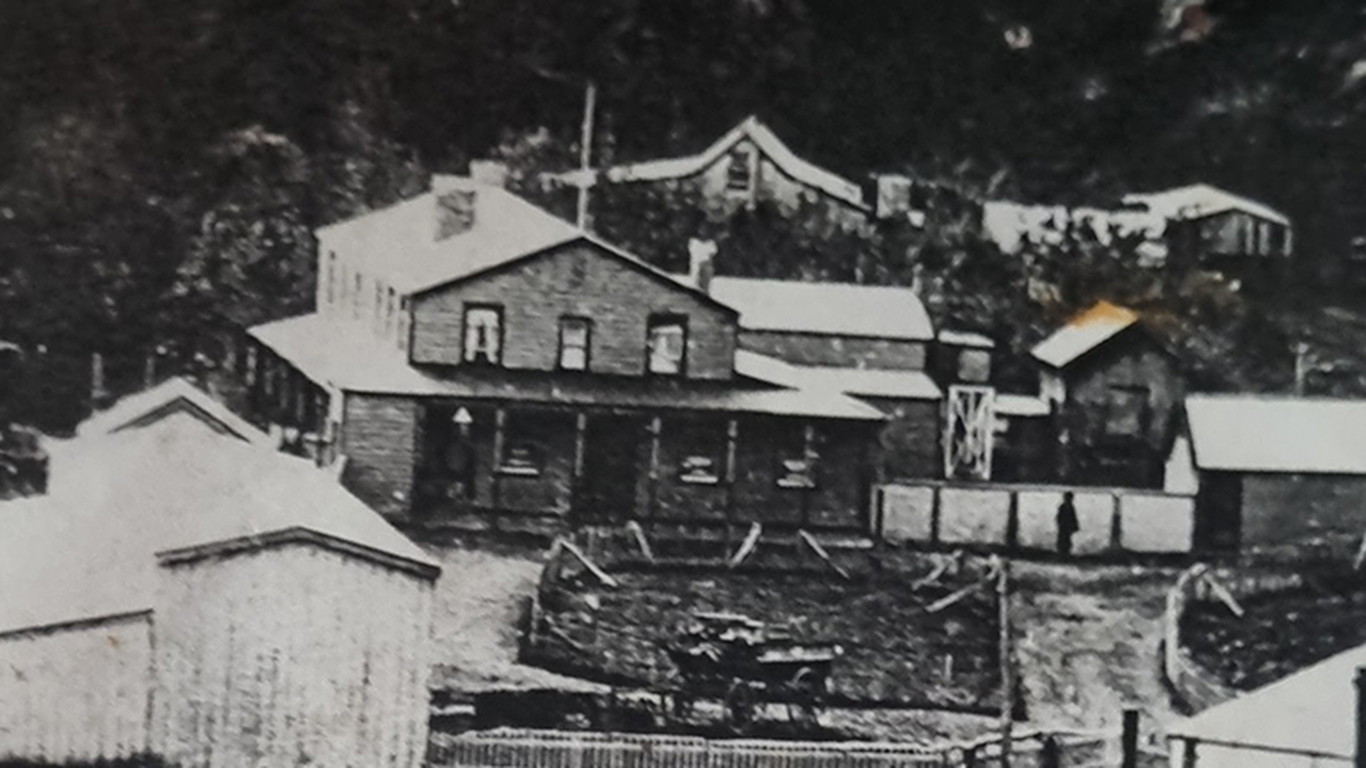
The original hotel, circa early 1900s
From the hotel’s history
“It is a rare surviving rural country hotel, largely unchanged for more than a century. Once the social and practical heart of an isolated farming community.”
The property is in the process of being placed into a family trust, with the intention of restoring and safeguarding the hotel for the long term. Over the years many have wanted to support this work. Now is the time.
The Shop
Pieces from the hotel, sold to keep it standing.
Rare and unusual objects gathered over decades in the building, each one reflecting a part of its life. Most are single items. All proceeds go to the restoration work.
Support the Roof
The building is in genuine need of care.
We are currently seeking support to replace the hotel’s ageing roof, which has not been fully replaced for generations, so the building can be protected for the future. The property is being placed into a family trust with the intention of restoring and safeguarding the hotel for the long term.
“Over the years we have been approached by people wanting to support the restoration of the hotel. Now is the time.”